
Julio de Caro (right) in 1940, with his singer Héctor Farrel (left). Julio de Caro, mostly known for his innovative work more than a decade earlier, would nontheless leave us a number of interesting recordings in his later career.
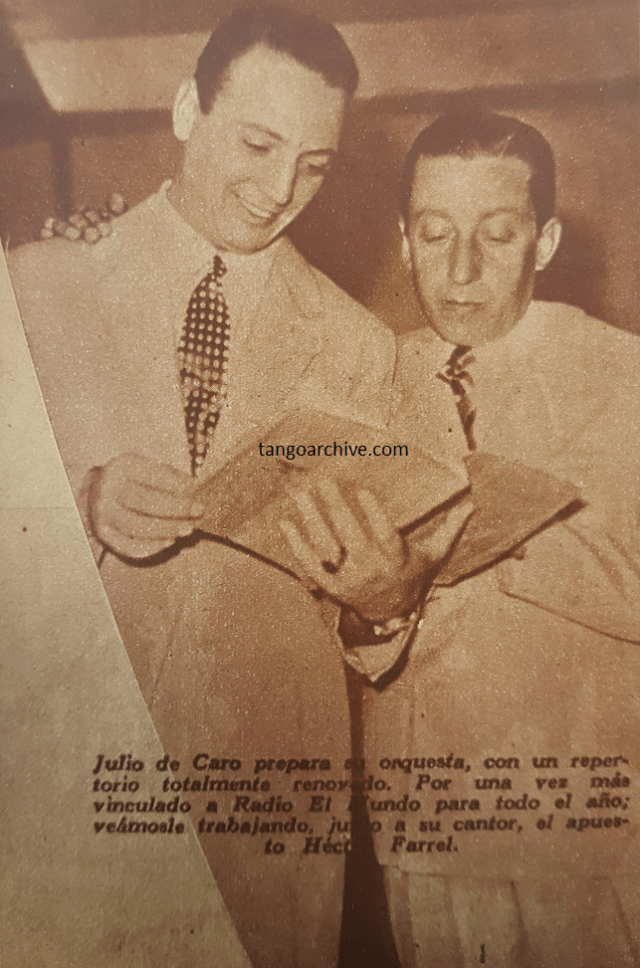
Julio de Caro (right) in 1940, with his singer Héctor Farrel (left). Julio de Caro, mostly known for his innovative work more than a decade earlier, would nontheless leave us a number of interesting recordings in his later career.
The idea of this blog is to give a more common human face to old tango artists. Yes, our tango idols were also human. They didn’t record or play live all day. Sometimes they just had fun together, laughing and joking, simply ignoring all the rivalry and envy for a moment. They were Argentines: good at having fun.
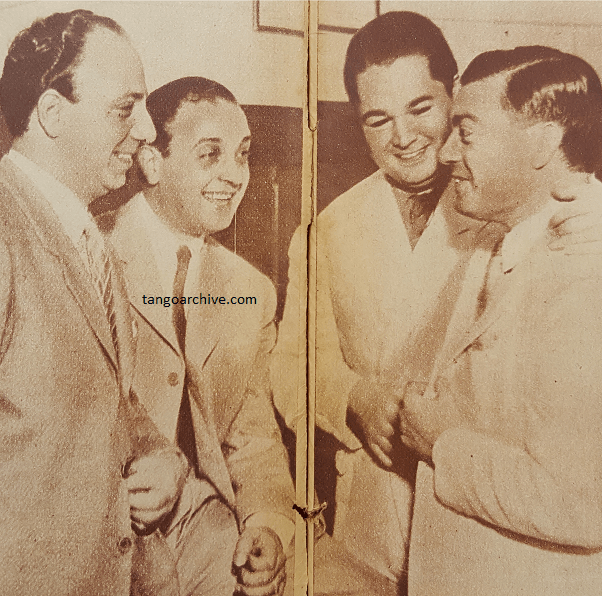
Left: Roberto Maida. Center: Miguel Caló. Center-right: Aníbal Troilo. 1940.
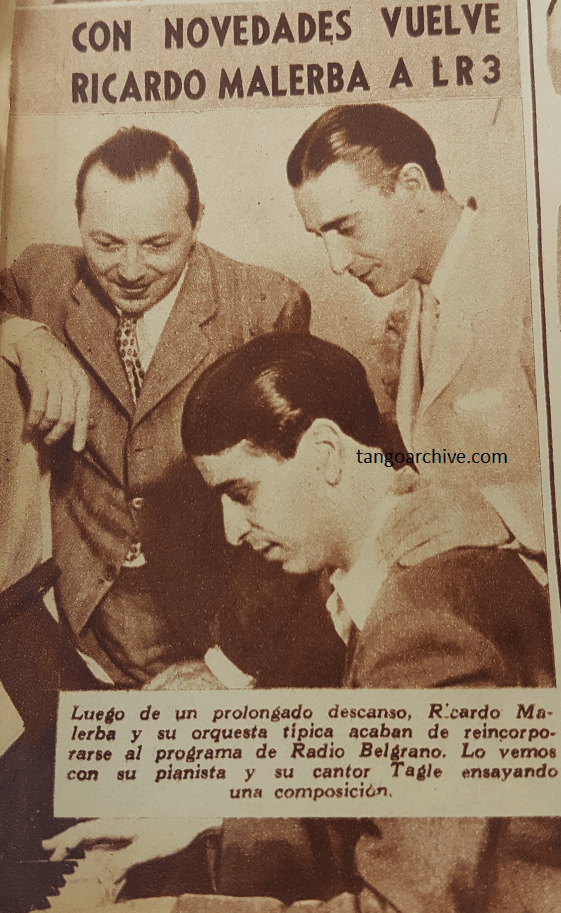
This photo from 1940 shows Ricardo Malerba (on the left) and his pianist rehearsing a song together with singer Alberto Tagle (on the right), better known to present-day dancers as Rafael Canaro’s primary singer in the 1930s. Tagle didn’t stay with Malerba for long, and we have no related recordings by Malerba from these early years of the Golden Age. It’s a shame, because our archive work proves how many surprising, wonderful combinations of famous musicians and singers were playing live everywhere during the best tango years, sadly without leaving any recordings behind.
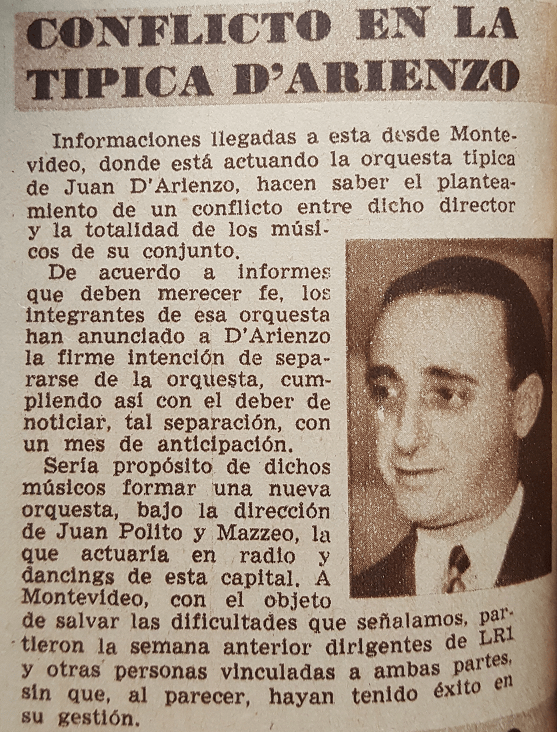
After several years of huge success, as attested by the sheer amount of popular, danceable recordings it left, Juan D’Arienzo’s orchestra suddenly imploded. In 1940, all the musicians and singer Alberto Echagüe rebelled and left the boss behind with empty hands. However, according to this excerpt, according to their contract, the orchestra members had to give D’Arienzo one month of breathing space, continuing their work for a while. It must have been a month of tension and conflict. The article also mentions that Juan Polito, the pianist, was to lead the new orchestra, and in the end he did, but unfortunately, they haven’t left behind any recordings. D’Arienzo survived this disaster, however, and resumed recording music with a new orchestra the same year.
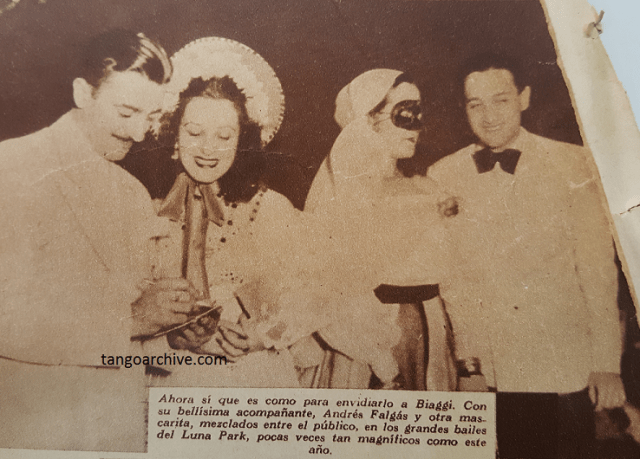
Ever seen a picture of Rodolfo Biagi and his singer Falgas together? Here you have a nice, spontaneous one, showing Biagi and Falgas with admirers at the big stadium/concert hall Luna Park in Buenos Aires, 1940.
Miguel Caló reappears on Radio Belgrano, 1940, with a brand new orchestra and singer Mario Corrales. Violinist Enrique Francini can also be seen in the background (center of the picture, on the right).

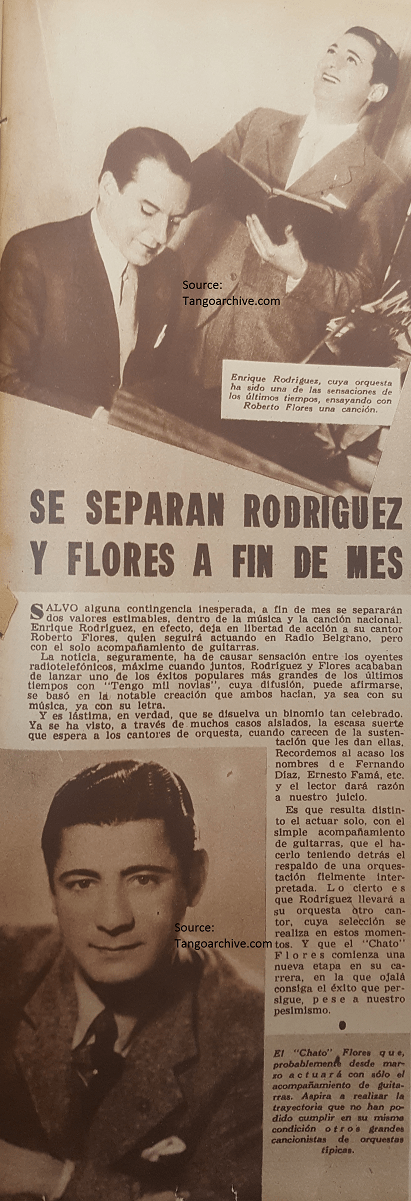
After success and popularity with Rodriguez, the singer Roberto Flores prefers a career as a soloist, 1940
Michael Krugman, † Dec. 2016
 Tango Archive